
Every master woodworker started as a nervous beginner holding a saw for the first time. The key to developing woodworking skills isn't expensive tools or years of training—it's starting with simple projects that build confidence while teaching fundamental techniques.
This guide presents 15 easy beginner woodworking projects carefully selected to develop specific skills progressively. Each project requires minimal tools, uses affordable materials, and produces useful or attractive results that motivate you to tackle the next challenge.
Why Start with Easy Projects?
Beginning with simple projects offers multiple advantages that set you up for long-term success in woodworking:
Skill development without overwhelming complexity. Simple projects teach fundamental skills—measuring, cutting, drilling, sanding, and finishing—without the pressure of complex joinery or tight tolerances. Master these basics first, then progress to advanced techniques naturally.
Quick wins build confidence. Completing a project in a few hours or a weekend provides immediate satisfaction. This positive reinforcement motivates you to continue learning and tackling progressively challenging builds.
Lower financial risk. Simple projects use less expensive materials. If you make a mistake, you're only out a few dollars of lumber rather than expensive hardwood or specialty materials. This reduces anxiety and encourages experimentation.
Practical learning about wood behavior. Simple projects teach how wood moves, how different species machine and finish, and how grain direction affects strength. These lessons apply to every future project regardless of complexity.
Essential Tools for Beginner Projects
You don't need a fully equipped workshop to complete these beginner projects. Start with this minimal tool set and expand as your skills and interests develop:
Measuring and Marking Tools
- Tape measure (25-foot minimum)
- Combination square or try square
- Pencil and marking knife
- Level (24-inch torpedo level works well)
Cutting Tools
- Circular saw or handsaw
- Jigsaw (optional but versatile)
- Miter box or power miter saw
- Utility knife
Fastening and Assembly Tools
- Cordless drill with basic bit set
- Hammer
- Screwdrivers (Phillips and flat head)
- Clamps (at least four 24-inch bar clamps)
Finishing Tools
- Random orbital sander or sandpaper with sanding block
- Paintbrushes for applying finish
- Safety glasses and dust mask
This basic toolkit covers everything needed for the projects in this guide. As you progress, you'll naturally identify which specialized tools would benefit your specific interests.
15 Easy Beginner Woodworking Projects
1. Simple Cutting Board
Skills Learned: Measuring, straight cutting, gluing, sanding, food-safe finishing
Build Time: 3-4 hours
Materials Cost: $15-25
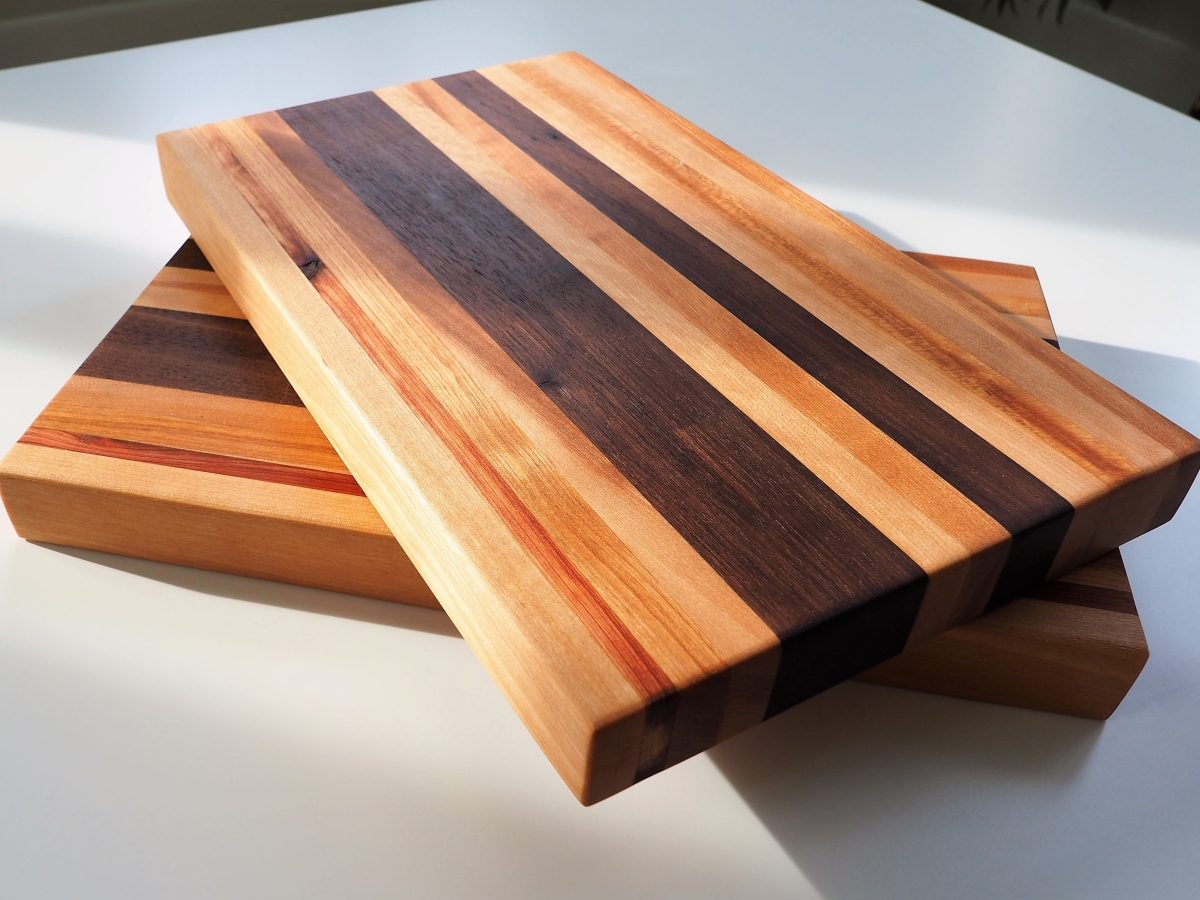
An edge-grain cutting board is the perfect first project. Select hardwoods like maple, walnut, or cherry at your local lumber yard. Cut boards into strips of equal width, arrange them in an attractive pattern, glue them together, and sand smooth.
This project teaches accurate measuring and cutting while producing a kitchen essential that looks professional. The relatively forgiving nature of cutting boards means minor imperfections won't affect functionality.
Pro Tip: Let glue dry completely (24 hours) before sanding. Use mineral oil or cutting board oil for a food-safe finish.
2. Basic Bookshelf
Skills Learned: Layout, assembly, ensuring square corners, basic joinery
Build Time: 4-6 hours
Materials Cost: $40-60
A simple bookshelf using pine boards teaches how to create a stable, square structure. This project introduces concepts like ensuring right angles, spacing shelves evenly, and creating sturdy back support.
Use pocket screws (with a Kreg jig if available) or simple butt joints reinforced with wood glue and screws. The finished shelf can be painted or stained to match your decor.
Pro Tip: Build the shelf lying flat on your work surface. Use a speed square frequently to check for square corners during assembly.
3. Wooden Picture Frame
Skills Learned: Miter cuts, precise angles, small-scale joinery
Build Time: 2-3 hours
Materials Cost: $10-15
Picture frames teach the importance of precise 45-degree miter cuts. Even small angle errors become obvious when four pieces meet at corners. This develops your measuring and cutting accuracy.
Start with a simple frame size like 5×7 or 8×10 inches. Use a miter box and handsaw or a power miter saw. Glue the corners and use small nails or corner clamps to hold joints while the glue dries.
Pro Tip: Cut all four pieces slightly long, assemble the frame, then trim to final size. This compensates for minor angle imperfections.
4. Step Stool
Skills Learned: Structural strength, weight distribution, safe design
Build Time: 5-7 hours
Materials Cost: $25-35
A sturdy step stool teaches important lessons about creating strong, safe structures. You'll learn how angle braces improve stability, why material thickness matters for weight-bearing projects, and how to test structural integrity.
Use 2×4 or 2×6 lumber for the legs and treads. Simple butt joints reinforced with screws create adequate strength for this utilitarian project.
Pro Tip: Test the stool with weight before considering it complete. Reinforce any joints that flex or creak.
5. Wooden Plant Box
Skills Learned: Outdoor wood selection, drainage design, weather-resistant finishing
Build Time: 3-4 hours
Materials Cost: $20-30
Planters teach you about wood species suitable for outdoor use and weatherproof finishing techniques. Cedar, redwood, or pressure-treated lumber resist rot and insects naturally.
Basic box construction with drainage holes in the bottom creates a functional planter. This forgiving project allows experimenting with decorative elements like trim or contrasting wood species.
Pro Tip: Drill ½-inch drainage holes every 6 inches in the bottom. Use exterior wood glue and stainless steel or coated screws to prevent rust stains.
6. Wall-Mounted Coat Rack
Skills Learned: Wall mounting, even spacing, decorative design
Build Time: 2-3 hours
Materials Cost: $15-25
A coat rack combines functional woodworking with decorative elements. Choose an attractive board (pine, oak, or reclaimed wood), space hooks evenly, and learn proper techniques for mounting heavy items to walls.
This project introduces working with wall studs, using appropriate anchors for different wall types, and ensuring level mounting for both function and aesthetics.
Pro Tip: Use a stud finder to locate solid mounting points. Space hooks 6-8 inches apart for adequate clearance between coats.
7. Simple Tool Tote
Skills Learned: Handle construction, reinforced joints, carried load design
Build Time: 4-5 hours
Materials Cost: $20-30
Build a wooden tool carrier to transport tools between projects or organize a growing tool collection. This teaches basic box construction plus how to create a strong, comfortable handle.
The dividers inside teach planning for functionality while the handle introduces shaped cuts and reinforced attachment points that withstand stress.
Pro Tip: Round over sharp edges on the handle for comfortable carrying. Reinforce the handle attachment points with glue blocks.
8. Floating Shelf
Skills Learned: Hidden mounting, weight capacity calculation, clean modern design
Build Time: 3-4 hours
Materials Cost: $15-25
Floating shelves appear to defy gravity with their hidden mounting system. You'll learn to create a hollow shelf that slides over a cleat securely mounted to wall studs.
This project teaches measuring for hidden components, calculating weight capacity based on wall stud spacing, and achieving perfectly level installation.
Pro Tip: The mounting cleat must be perfectly level. Use a long level and double-check measurements before driving any screws into the wall.
9. Laptop or Tablet Stand
Skills Learned: Angle calculations, ergonomic design, modern aesthetics
Build Time: 2-3 hours
Materials Cost: $10-20
An angled laptop stand teaches you to calculate and cut precise angles for functional rather than decorative purposes. The stand must hold devices securely at the correct height and angle for comfortable use.
This project appeals to younger woodworkers and demonstrates that woodworking can produce modern, useful items for daily life.
Pro Tip: Cut the angle at 15-20 degrees for comfortable viewing. Add a small lip at the bottom to prevent devices from sliding.
10. Serving Tray
Skills Learned: Hand-hold design, food-safe finishing, decorative details
Build Time: 3-4 hours
Materials Cost: $15-25
A serving tray combines utility with aesthetics. Choose attractive wood, add comfortable handles, and finish with food-safe oils or polyurethane. This project teaches you about grain pattern selection and how wood choice affects the final appearance.
Pro Tip: Round over all edges for comfortable handling. Sand to at least 220-grit before applying finish for a smooth, professional feel.
11. Small Storage Box
Skills Learned: Box joints or dovetails (simple version), lid fitting, hinges
Build Time: 5-6 hours
Materials Cost: $20-30
Building a small box with a fitted lid teaches precision woodworking. The lid must fit properly—not too tight, not too loose—requiring careful measurement and test fitting.
This project introduces hardware installation (hinges or magnetic catches) and teaches the importance of planning for wood movement in lids.
Pro Tip: Make the lid opening slightly larger than the box body to allow for wood expansion. Test the fit before gluing anything permanently.
12. Magnetic Knife Strip
Skills Learned: Embedding hardware, magnetic installation, kitchen functionality
Build Time: 2-3 hours
Materials Cost: $15-20
A magnetic knife holder is a quick project that produces immediate kitchen impact. Router a groove in an attractive piece of hardwood, install magnetic strips, and mount to the wall.
This teaches working with purchased hardware components and integrating them into wood projects cleanly.
Pro Tip: Use strong neodymium magnets rated for the weight of your knives. Test holding power before final assembly.
13. Wine Rack
Skills Learned: Repetitive precision, angled drilling, decorative assembly
Build Time: 4-5 hours
Materials Cost: $25-35
A tabletop or wall-mounted wine rack teaches repetitive precision—every bottle holder must be identical for professional appearance. Angled holes hold bottles securely while displaying labels.
This project shows how careful planning and consistent execution create impressive results from simple techniques.
Pro Tip: Create a drilling jig to ensure all holes are at the same angle and spacing. Test with one bottle before drilling all positions.
14. Simple Bench
Skills Learned: Furniture construction basics, seating comfort, structural design
Build Time: 6-8 hours
Materials Cost: $40-60
A basic bench is your first real furniture project. It teaches the fundamentals of furniture construction—strong joints, appropriate material thickness, comfortable dimensions, and stable design.
Start with a simple design using 2×10 or 2×12 boards for the seat and 2×4 boards for the legs and supports.
Pro Tip: Standard bench height is 17-18 inches. Make the seat slightly wider than seems necessary—14-16 inches deep provides comfortable seating.
15. Birdhouse
Skills Learned: Outdoor construction, species-specific design, roof assembly
Build Time: 3-4 hours
Materials Cost: $15-25
Building a birdhouse teaches outdoor construction techniques while creating something that attracts wildlife to your yard. Different bird species require specific entrance hole sizes and interior dimensions.
Research your target bird species before building. This teaches that successful projects require planning beyond just following plans.
Pro Tip: Use untreated cedar or pine. Avoid paint inside the birdhouse—natural wood is healthier for birds. Include drainage holes and ventilation gaps.
Progressive Learning Path
Tackle these projects in a logical sequence that builds skills progressively:
Start Here (Projects 1-5)
Begin with the cutting board, plant box, coat rack, picture frame, and laptop stand. These require minimal tools and teach fundamental measuring, cutting, and assembly skills.
Build Confidence (Projects 6-10)
Move to bookshelf, step stool, tool tote, floating shelf, and serving tray. These projects introduce more complex assembly, structural considerations, and mounting techniques.
Refine Skills (Projects 11-15)
Challenge yourself with the storage box, magnetic knife strip, wine rack, bench, and birdhouse. These demand greater precision, introduce hardware integration, and teach furniture-scale construction.
Common Beginner Mistakes to Avoid
Skipping Proper Measuring
Rushing through measurements causes most beginner mistakes. Develop a consistent measuring routine: measure the space, mark clearly, measure again, then cut. The old saying "measure twice, cut once" became popular because it's essential advice.
Using Dull Tools
Dull saw blades and drill bits make woodworking harder and more dangerous. Sharp tools cut cleanly and require less force, improving both safety and result quality. Learn to recognize when tools need sharpening or replacement.
Ignoring Wood Movement
Wood expands and contracts with humidity changes. Solid wood projects need joinery that accommodates this movement. For beginner projects using simple joints and screws, leave small gaps and avoid over-tightening fasteners.
Inadequate Sanding
Proper sanding transforms rough projects into professional-looking pieces. Progress through sandpaper grits (80, 120, 180, 220) rather than jumping from coarse to fine. Sand with the grain for best results.
Rushing the Finish
Applying finish in a dusty environment or without proper surface preparation ruins otherwise good projects. Clean dust thoroughly, apply thin coats, and allow proper drying time between coats.
Building Your Skills Further
After completing several beginner projects, you'll naturally want to tackle more challenging builds. Access to quality plans becomes increasingly valuable as your skills develop.
Collections like Teds Woodworking provide progressive learning paths with thousands of plans ranging from simple starter projects to advanced furniture. Having instant access to professional plans saves research time and provides consistent quality across all projects.
Ready to Expand Your Project Library?
Access 16,000 professional woodworking plans from beginner to advanced
See Our Top Recommended PlansFrequently Asked Questions
How long does it take to complete these beginner projects?
Build times range from 2-8 hours depending on the project and your experience level. First-time woodworkers should expect projects to take longer than listed times. As you gain experience and develop efficient work habits, build times decrease naturally.
What wood should beginners use?
Pine is excellent for learning—it's affordable, widely available, machines easily, and accepts stain or paint well. Once comfortable with basic techniques, experiment with hardwoods like oak, maple, or cherry for projects where appearance matters more than cost.
Do I need a full workshop to start woodworking?
No. These beginner projects can be completed in a garage, basement, or even outdoors with minimal space. A sturdy work surface (sawhorses and plywood work well), basic hand tools, and a portable power drill cover most needs initially.
How much should I expect to spend on materials?
Most beginner projects cost $10-60 in materials. Shopping at home centers during sales and using common lumber species keeps costs low. As you build a scrap wood collection from previous projects, material costs decrease further.
What's the best first project for absolute beginners?
A simple cutting board or picture frame makes an excellent first project. Both teach fundamental skills, produce useful results quickly, and require minimal tools. Success with either project builds confidence for tackling more complex builds.
How do I know when I'm ready for more advanced projects?
You're ready for advanced projects when you can complete beginner builds without constant plan reference, your cuts are consistently accurate, and your finished projects look professional. Confidence in basic techniques indicates readiness to learn new skills.
Should I follow plans exactly or modify them?
As a beginner, follow plans closely to learn proper techniques and proportions. Once you understand why plans specify certain dimensions and methods, intelligent modifications become easier. Always consider structural and safety implications before changing critical dimensions.
What safety equipment do I need?
Essential safety gear includes eye protection (safety glasses), hearing protection for power tools, and a dust mask when sanding. As you add more power tools to your workshop, consider upgrading to more comprehensive respiratory protection and ensuring adequate ventilation.
Conclusion
Starting woodworking with easy beginner projects builds skills methodically while producing useful, attractive results that motivate continued learning. Each completed project develops muscle memory, improves tool control, and teaches lessons that apply to every future build.
Don't rush through these beginner projects chasing advanced builds. The skills you develop now—accurate measuring, clean cutting, proper sanding, and good finishing—form the foundation for all future woodworking success. Take time to master fundamentals, and complex projects will feel achievable rather than intimidating.
Select a project that interests you from this list, gather your materials, and start building today. Every master woodworker's journey began with that same first cut. Make yours count.